
 English
How Cable Cars Work: Understand Its Safety-Oriented Mechanisms
Many passengers feel nervous riding high-altitude cable cars. Cable cars carry no on-board engines. All power comes from station-mounted motors. Multiple mechanical safeguards are built-in.
1. Rope-circulation System: Main Power Channel
Cabin cars have no self-power. Station-based high-torque motors rotate drive wheels to circulate steel ropes. A passive return wheel at the opposite station forms a closed-loop rope track. Intermediate support towers with top sheave sets hold up ropes and avoid direct friction between ropes and towers.
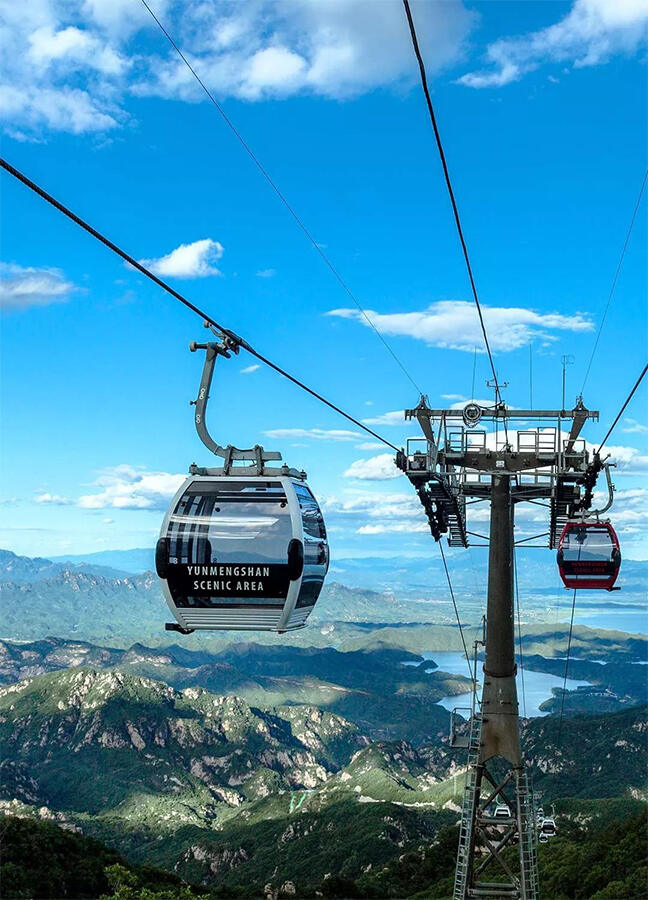
2. Detachable Grips: Intelligent Mechanical Clamps
Mounted on cabin tops, grips use compression springs and lever linkages to clamp or release ropes. - At station entry: Guide rollers enter special station rails. Levers get pressed, grips release ropes. On-site low-speed mechanisms move cabins for safe passenger transfer. - At station exit: Rails open grip springs. Springs snap back to fasten onto ropes, and cabins re-join high-speed main-line operation.
3. Anti-collision & Avoidance Design
Curved tower-top sheaves guide ropes and grips smoothly. Large-curvature connection structures between cabins and grips create avoidance clearance to prevent impacts when passing towers.
Conclusion
Rope circulation, detachable-grip linkage and tower-avoidance structures together build reliable safety barriers for high-altitude operation.